The Runway is Closing

From 2005 to 2021, around 2,200 American local print newspapers closed. From 2008 to 2020, the number of American newspaper journalists fell by more than half. In 2005, there were 69,900 journalists employed across newspapers and digital outlets. By 2015, that number had fallen to 51,980, a 26% decline in a single decade.
Nobody made a film about any of that.
Instead, Hollywood made The Devil Wears Prada 2.
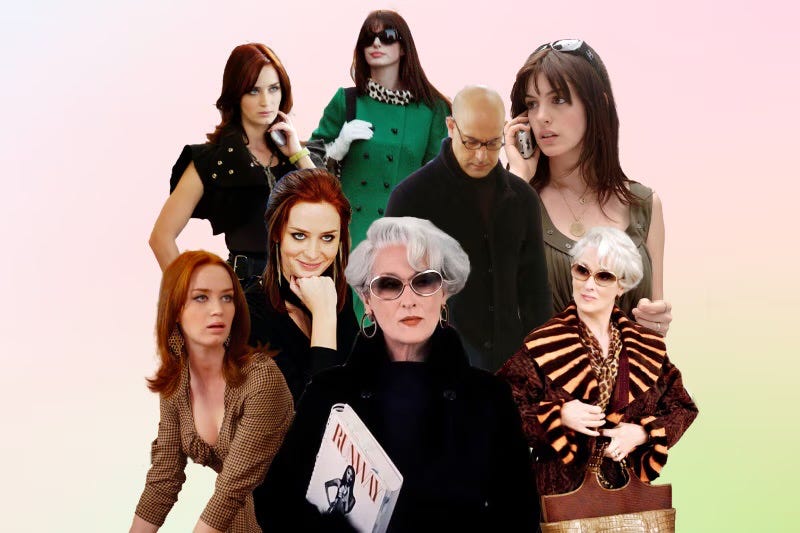
Which is, in its own way, more revealing.
In 2006, Miranda Priestly was terrifying because she was powerful. In 2026, she is terrified because she is losing. That shift, from untouchable to endangered, is not just a plot device. It is the most honest thing either film says about what happened to journalism in the twenty years between them.
The first film was always about more than fashion. Andy Sachs was a journalism graduate who took a job at a magazine because it was a stepping stone to somewhere that mattered. The hierarchy was clear.
Print = prestige
Runway = power
Miranda Priestly did not need to justify herself to anyone.
The sequel follows Andy back to Runway, this time as Features Editor, helping Miranda navigate a new media landscape and corporate threats to the magazine’s survival. The dragon lady is now fighting for her life. And the enemy is not a rival editor. It is structural economic reality.
That reality has three converging forces behind it, each feeding the others.
1. The first was advertising. Print media was built on classified and display revenue. The internet did not compete with that model. It demolished it. Classifieds moved to Craigslist, display budgets to Google and Facebook, and newspapers were left with a cost structure designed for a revenue base that had ceased to exist.
2. The second was audience. Younger readers chose free and accessible content online over physical subscriptions. The reader who bought a magazine because there was no alternative became the reader who scrolled for free because there was every alternative.
3. The third, and most recent, is AI. Generative AI now offers more efficient ways of accessing and distilling information at scale, while creators and influencers are pulling audiences toward personality-led news and away from institutions that feel less relevant and less authentic. Miranda built her power on being the sole arbiter of taste. The internet gave everyone a platform. AI is threatening to make the platform redundant.
This is what the sequel is really about.
Declining engagement for traditional media combined with low trust is leading politicians, businesspeople, and celebrities to conclude they can bypass the media entirely, giving interviews instead to sympathetic podcasters.
There is something quietly devastating about watching Meryl Streep play a woman who spent her career as the most powerful person in the room, now scrambling to keep the room itself from closing.
The first film asked one question: could you survive Miranda Priestly?
The second asks another: can Miranda Priestly survive what happened to journalism?
The answer the industry already knows is probably not. Not in the form she represented.
Critics have noted the sequel offers trenchant observations about the state of modern media. What it actually offers is a eulogy, dressed in couture, for a model of media power that the internet spent twenty years dismantling and that AI is now finishing off.
Andy Sachs left Runway in 2006 to become a real journalist. In 2026 she comes back not just to save the magazine, but because the journalism career she had built is collapsing.
The tragedy is not that Miranda is losing.
It is that Andy knew all along that the thing she truly wanted, journalism, what she had steadily worked toward, was already gone.