Sweat as "Status"

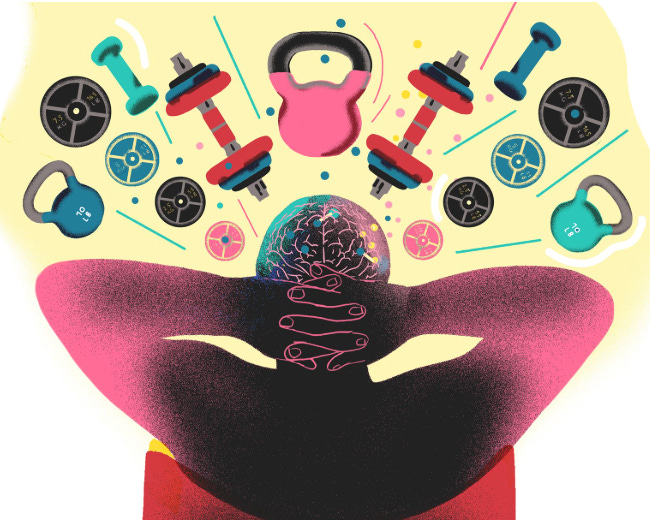
One of the newer cults in India is fitness.
Barre classes before sunrise. Pilates studios that feel less like gyms and more like members’ lounges. Zumba, spinning, spinning on yachts, Pilates on yachts. Hyrox, followed by Hyrox in Bali, then Hyrox in Sri Lanka, eventually capped by a recovery retreat somewhere warm enough to justify linen year-round.
You get the gist. In certain circles, being unfit is no longer a personal choice. It is a social misstep.
Even Warren Buffett once admitted that discipline, not desire, governed his habits. He famously wrote about dangling unsigned $10,000 checks in front of his children, promising to sign them if he missed a weight target. His children responded by aggressively tempting him with desserts. The money mattered more than the cake. Loss aversion beat appetite.
This is not fitness as health. It is fitness as ‘status’.
What makes this inversion striking is how complete it is. Historically, affluence insulated you from physical effort. Today, affluence demands visible exertion. Not because labour is required, but because restraint must be performed. Shakes made of ingredients that sound pharmacological. Detoxes with medical supervision. Preventive diagnostics discussed casually over coffee. An entire industry built on the promise that ageing can be slowed, managed, or at least disguised.
The money follows the anxiety. India’s wellness market is estimated to be worth over $60 billion and is growing at high single-digit rates annually, driven disproportionately by urban consumers with rising disposable incomes (Source: McKinsey, BCG). Globally, the wellness economy crossed $5 trillion in 2023, with fitness, longevity, and preventive health among the fastest-growing segments (Source: Global Wellness Institute). These are no longer fringe behaviours. They are mainstream aspirations among the affluent.
Behavioural economics offers a full vocabulary for this shift, but the underlying driver is simpler.
Anxiety.
In an era where outcomes feel increasingly uncertain, bodies become projects.
When macro forces feel ungovernable, people turn inward, optimising the few variables they believe remain under their control.
Work is volatile.
Markets are cyclical.
Institutions feel fragile.
The body, at least in theory, still responds to effort.
This is where fitness begins to drift from health into obsession. Workouts stack until rest feels indulgent. Recovery becomes something that must be earned. Ageing starts to feel like a personal failure rather than a biological certainty. The irony is difficult to miss. A generation that has largely outsourced physical labour now treats physical optimisation as a competitive sport.
The data supports this cultural shift. Urban Indians in the top income deciles now spend a significantly higher share of discretionary income on fitness, wellness, and preventive care than on traditional leisure categories such as travel or dining, and in some cases even more than on long-term savings and investments (Source: RBI Consumer Expenditure Surveys, Deloitte). Gym memberships, boutique studios, and endurance events have grown far faster than participation in organised sport or community-based recreation. This is not movement for joy or play. It is movement as signalling.
Signalling theory explains much of what we see. When money becomes abundant, its ability to differentiate diminishes. Status then migrates to behaviours that are expensive, time-intensive, and difficult to fake. Discipline fits neatly into that category. So does suffering, when properly curated.
What presents itself as a collective pursuit of health is often a quieter competition for legitimacy.
Who is trying hard enough?
Who is ageing well?
Who appears most in control?
Fitness itself is not the problem. Movement matters. Strength matters. Longevity matters. The concern arises when a society begins to treat being unfit as taboo and exhaustion as virtue.
When health becomes an identity rather than a practice, it stops being about wellbeing and starts being about fear. Fear of decline? Fear of irrelevance? Fear of letting go?
That is how a perfectly reasonable desire to stay fit turns into something far less healthy, because they are exercising to prove something no body can ultimately guarantee.
Hi Aditi, this is such a great observation on how fitness has shifted from health into performance and signaling. The way you tie it to anxiety and control is so accurate.